A risk score security analysts can inspect and trust.
IPShield is a multi-tenant platform that scores the risk of IP addresses and shows security teams why, so they can act on it.
Security team will only pilot a platform it can trust. That meant a risk score it can explain, an audit trail it can verify, and a system that cannot leak customer data.
I turned that into four design constraints:
Explainable scores
Analysts need to see why an IP scored as it did, not only the number.
Provable records
Every security event and audit entry has to be tamper-evident.
Privacy by default
Pilot integrations must never receive or store personal data.
Small enough to run
Every decision had to keep the system manageable for a very small team
From our interview with a primary user, we learned that when a customer initiates a transaction from a potentially fraudulent IP address, a SOC analyst may spend several hours cross-checking multiple tools, reviewing other security indicators, and verifying KYC information before determining whether the customer is legitimate or fraudulent. IPShield streamlines this process by providing an initial, clear assessment of IP-related risk, helping analysts identify potential threats faster and reduce the time spent on manual verification.
Key Decisions
Trust shaped the interface as much as the backend. The decisions that mattered most:
how the reasoning with the score.
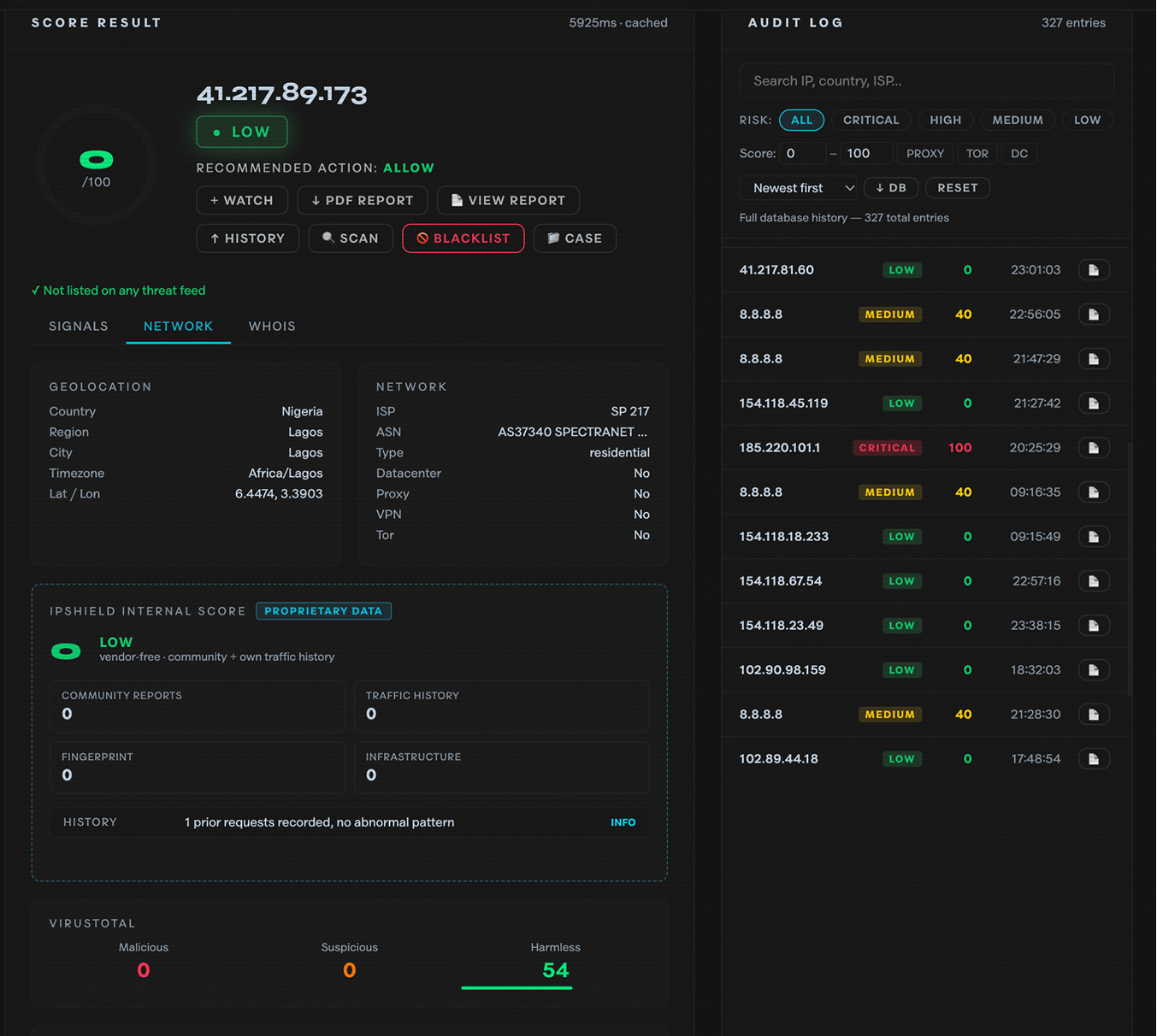
The scoring pipeline returns a confidence score and model context. I designed the dashboard to help analysts inspect the available evidence before acting on a result; the exact signals shown should match the production model and customer permissions.
Make the audit trail visible.
The audit log is hash-chained and its integrity can be verified. Users can check this by navigating to the audit table to see all information.
Treat permissions as a UX problem
Product tier (read-only, analyst, admin) is separate from org role (member, admin, owner), so people see exactly what they can do and why. Internal staff tools sit behind a separate gate and never appear in customer accounts.
Make keys feel safe.
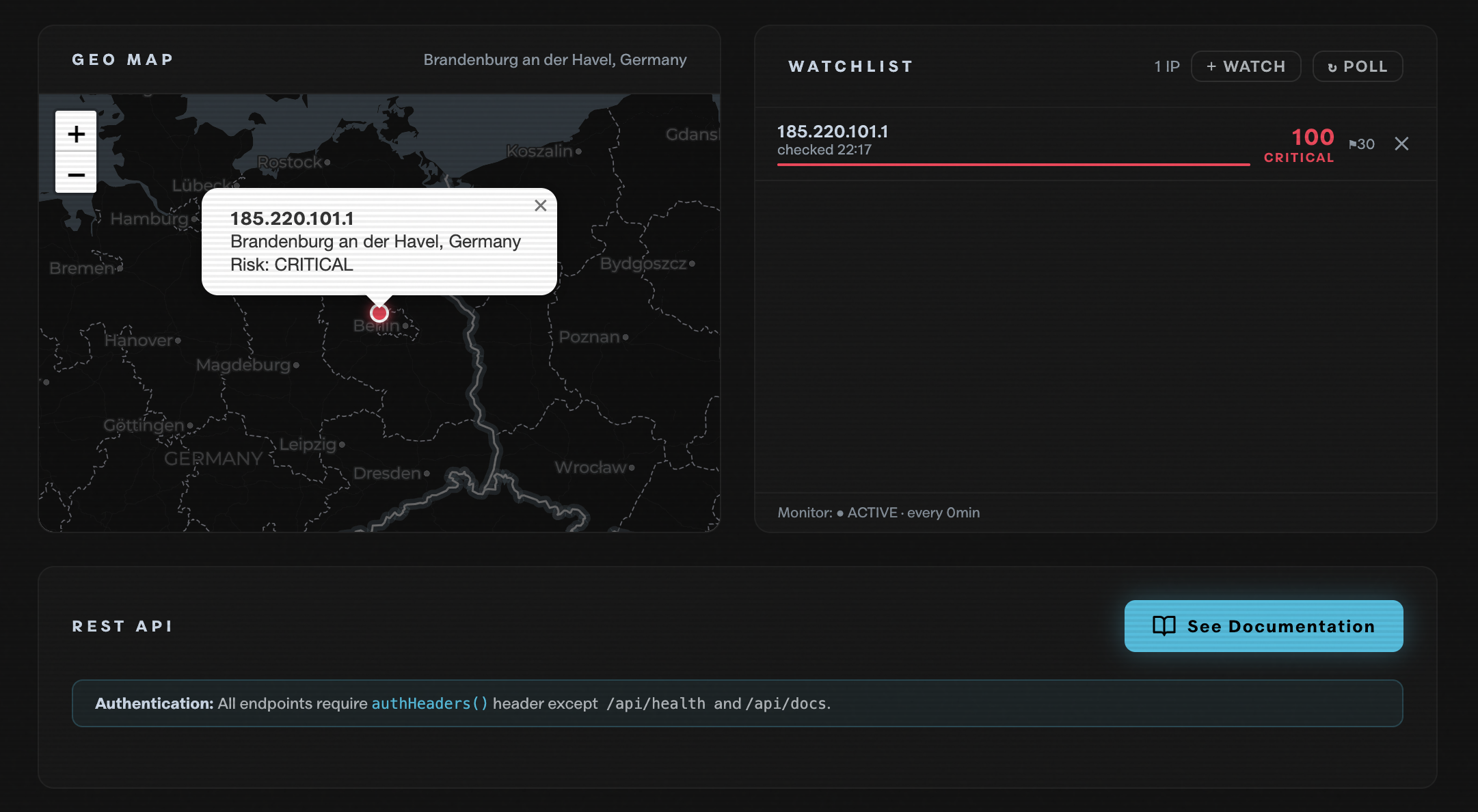
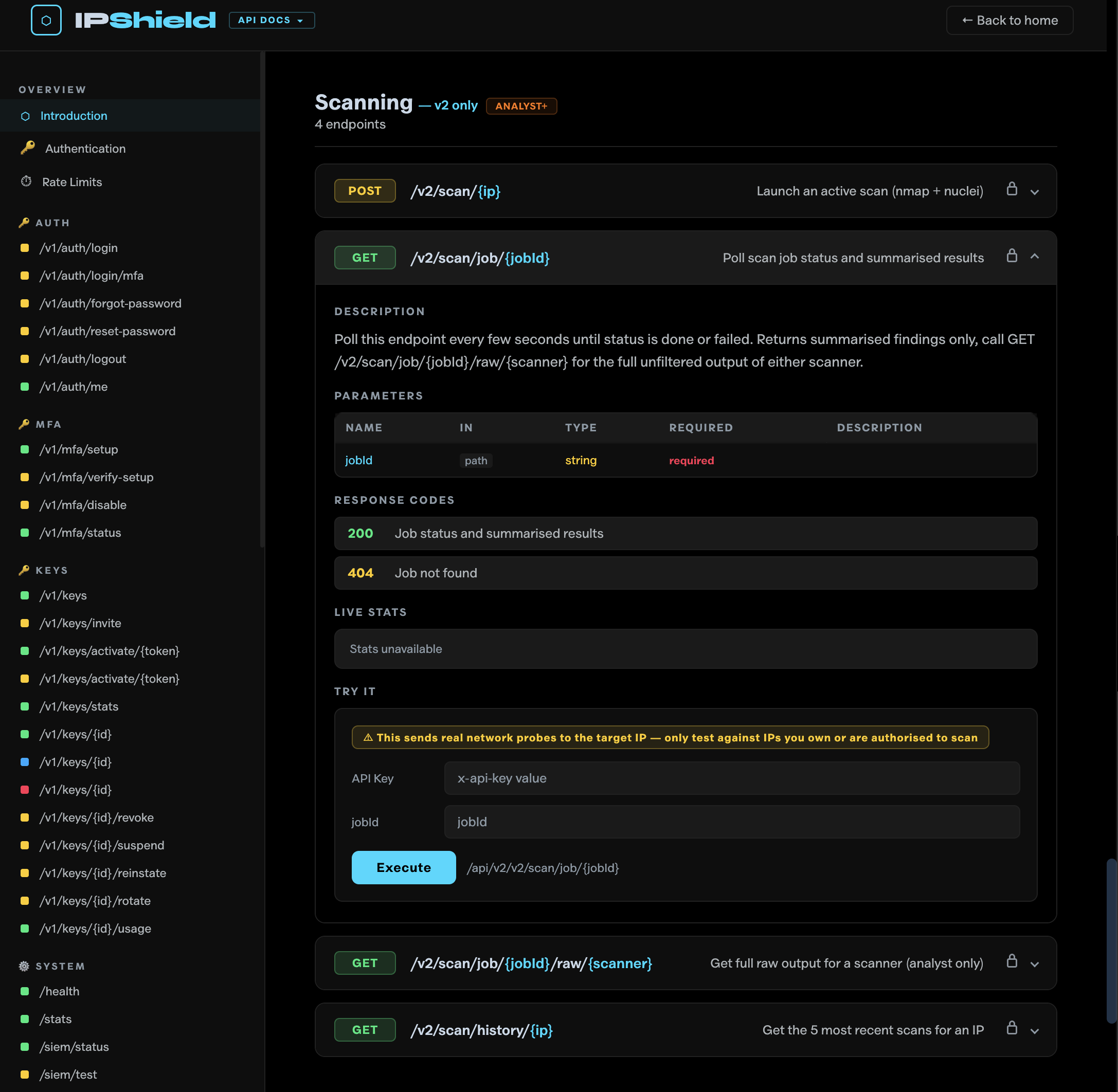
One API key per organisation, shown once and then wiped, with only a hash stored. Upon creation users see one time view and ability to copy API key.
Keep slow work off the screen.
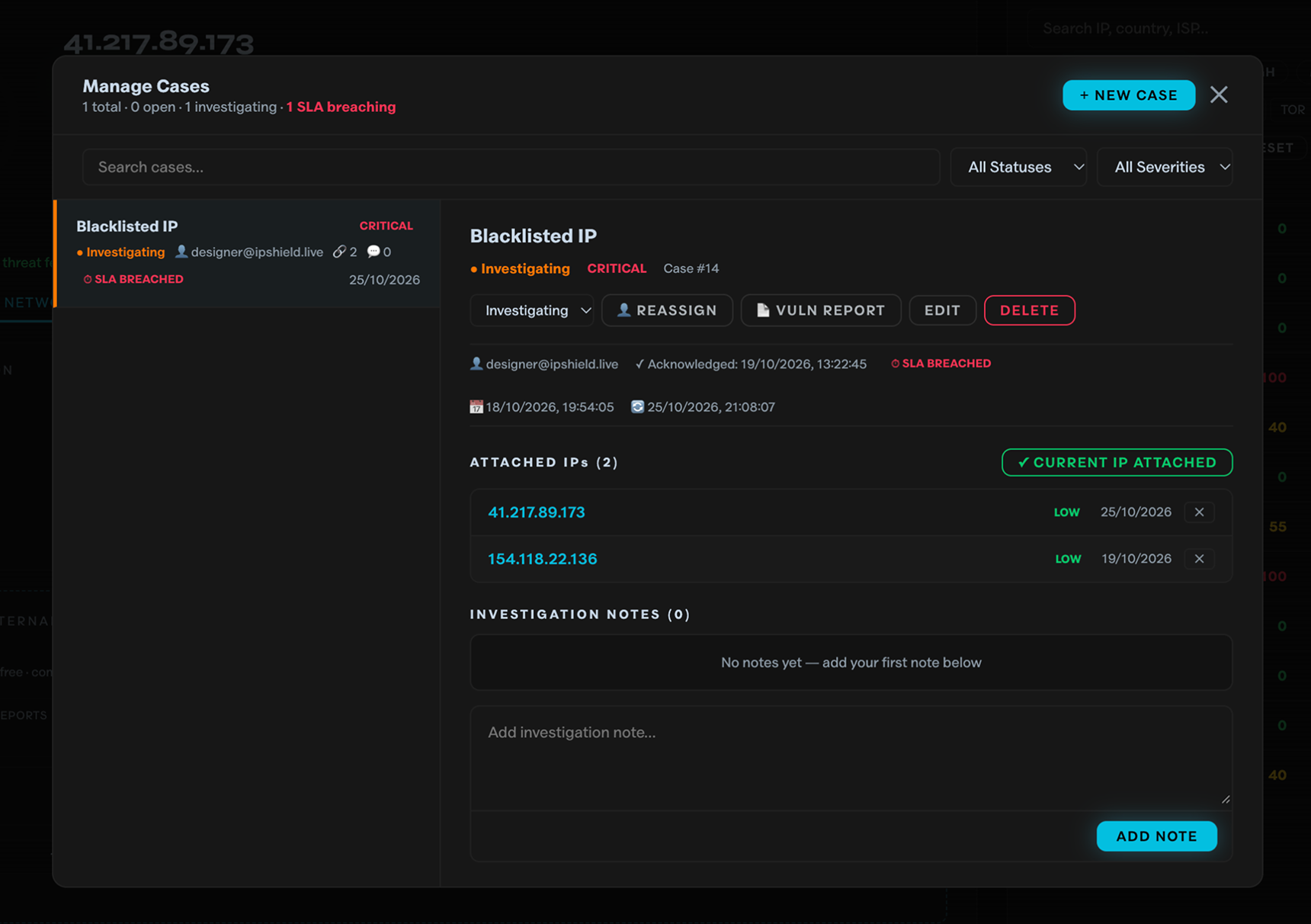
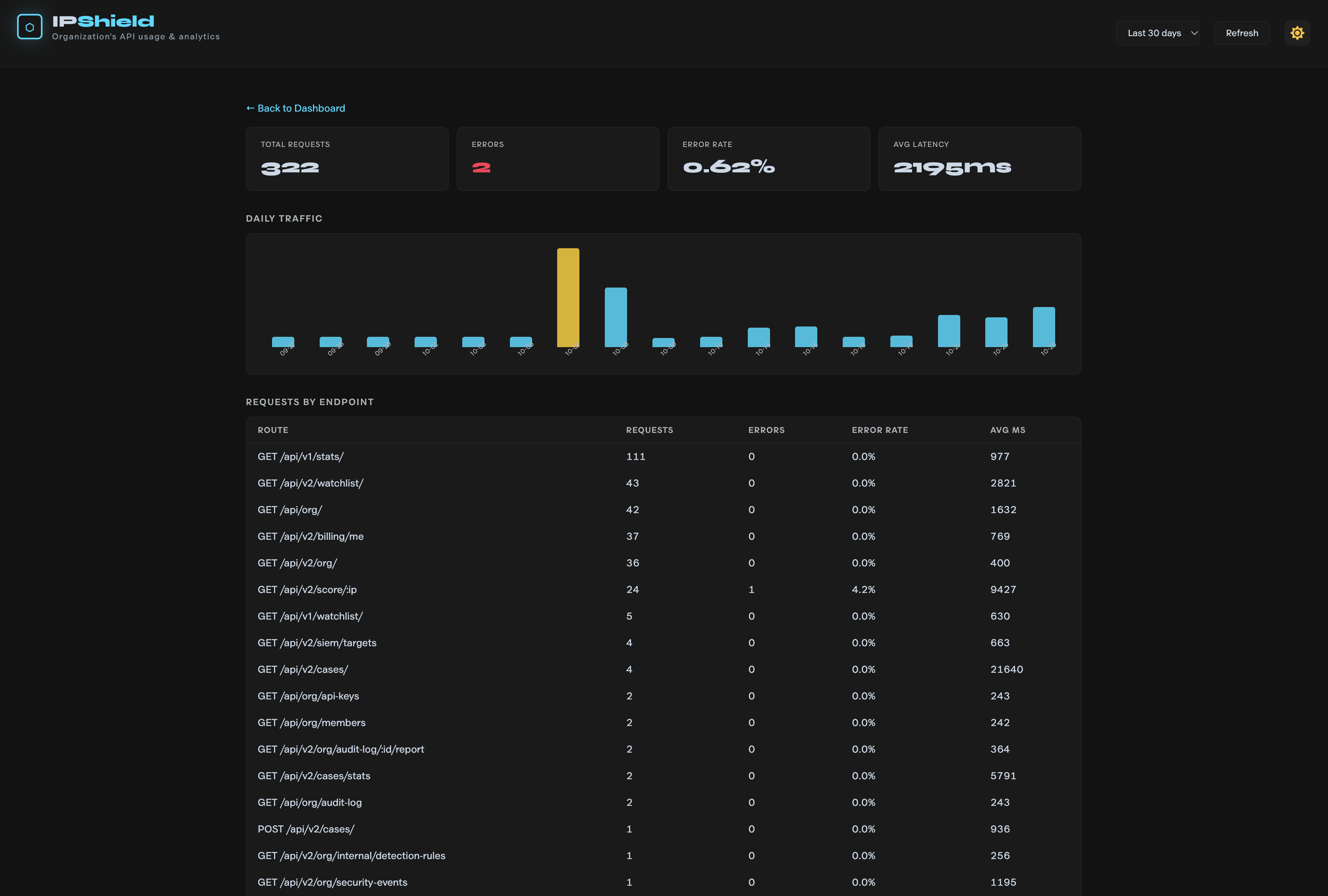
Batch processing, correlation and case creation run in the background so the dashboard stays responsive; the interface shows IPs currently be monitored and set threshold for each IPs..
An operational SOC dashboard built around the core triage flow: analyze, monitor, score alert and reasons, case, complete action. Behaviour detection flags account-level IP velocity on login flows, and cases are created automatically from risk tier.
What testing taught me
During the pilot rollout with banks and internal testing, we identified and resolved several critical issues majorly around permissions and routing mistakes that repeated across the codebase
Better work, measured.
The lesson.
We discovered that when a member analyzed an IP address, the associated information could be exposed to another organization.
We also identified issues with background cron services responsible for alerting on IP addresses and blacklisting high-risk IPs. Additionally, a bug affecting the integration of custom SIEM webhooks was discovered and fixed.
Another significant issue involved quota management.
We found that when a member consumed their allocated account quota, it inadvertently affected other team members, contrary to the intended behavior. This was corrected to ensure that each member's quota usage remains independent and does not impact others.
All identified issues have been addressed, and the corresponding fixes have been incorporated into the latest updated version.