Exchange currencies. Manage funds. Send money home.
Swap helps Nigerians living abroad exchange currencies and send money to friends and family in Nigeria.
Sending money home was unnecessarily difficult
Swap helps Nigerians living abroad exchange currencies and send money to friends and family in Nigeria.
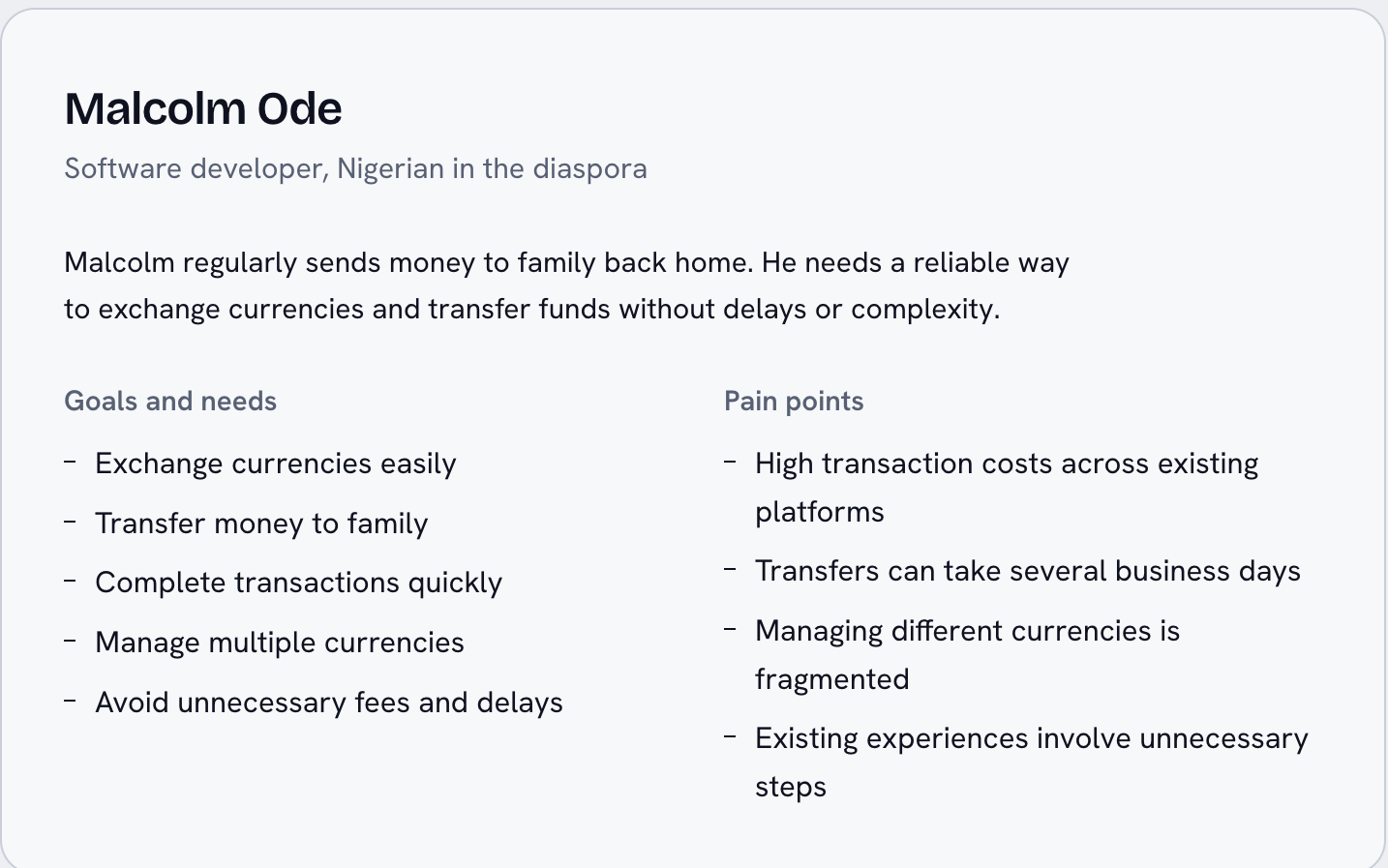
Users
For Nigerians abroad, sending money home can mean high fees, many steps and long processing times. Existing options also left room to improve how people manage and exchange different currencies.
Business need
Make it easier for Nigerians living abroad to exchange currencies and send money seamlessly to the people who matter most to them.
Understanding the user
Exchange → Manage → Send
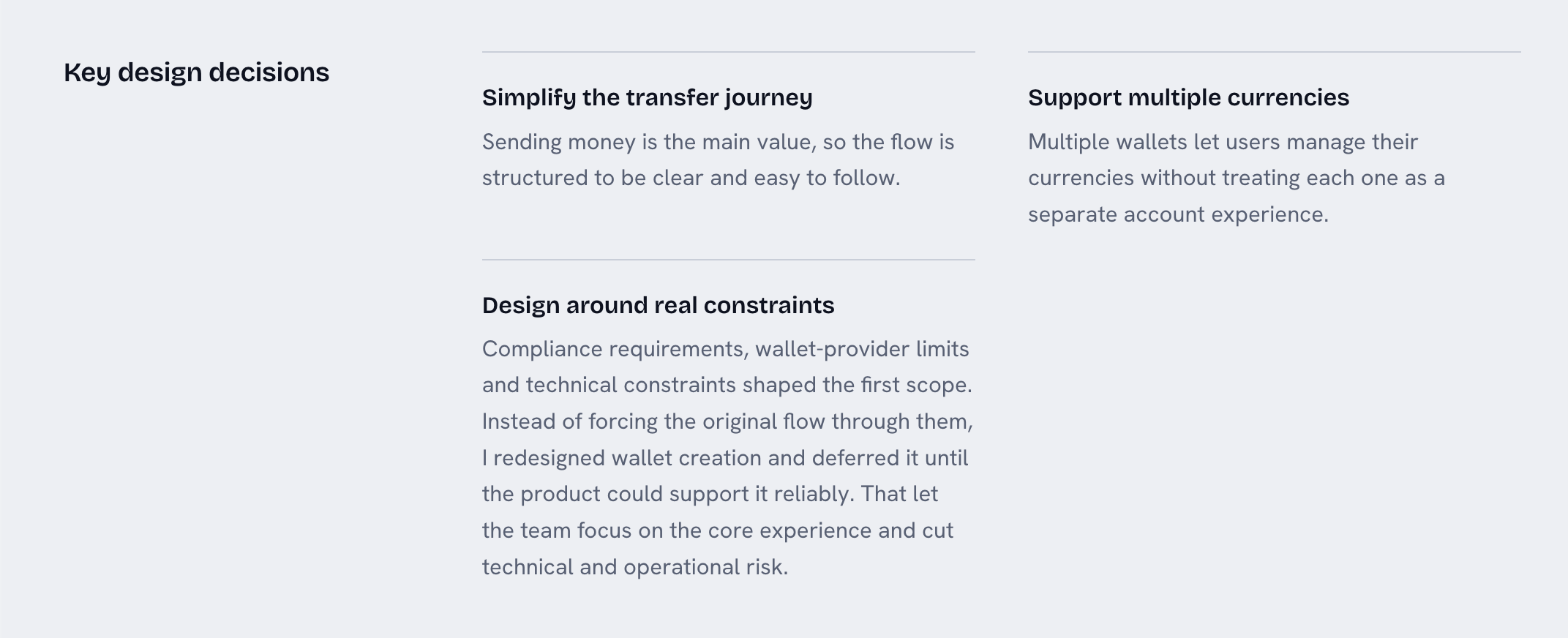
"I shaped the product strategy around the three core actions that mattered most for the first release:
Exchange: Give users a clear, straightforward way to convert between currencies.
Manage: Enable users to track and manage their currencies across multiple wallets.
Send: Make sending money to others simple, using either bank details or contact information."
This created a simple, focused product model for the initial launch while providing a scalable foundation for adding more financial services over time. I aligned stakeholders around this structure by using research insights, user needs, and clearly defined product flows to make the priorities and trade-offs visible”
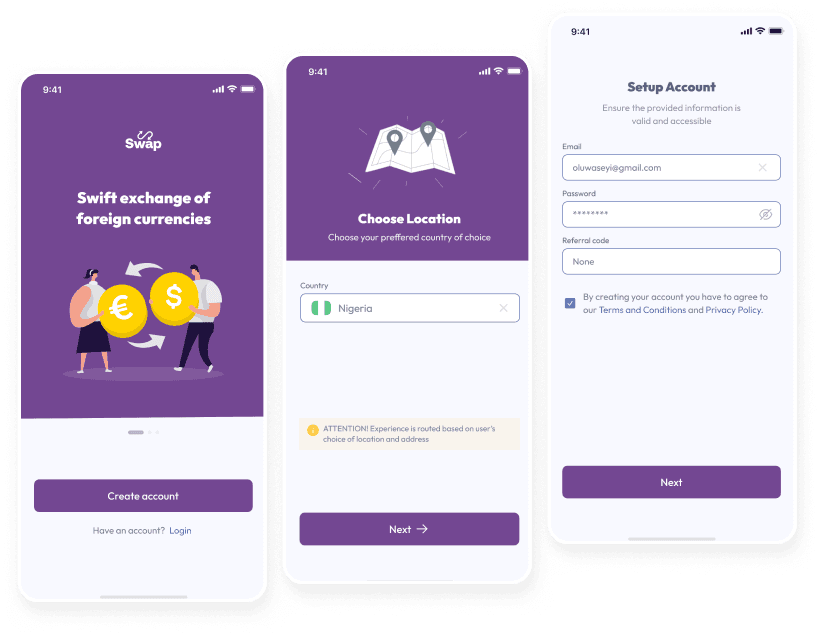
Reframing the workflow.
Start
Review
Decision
Follow-up
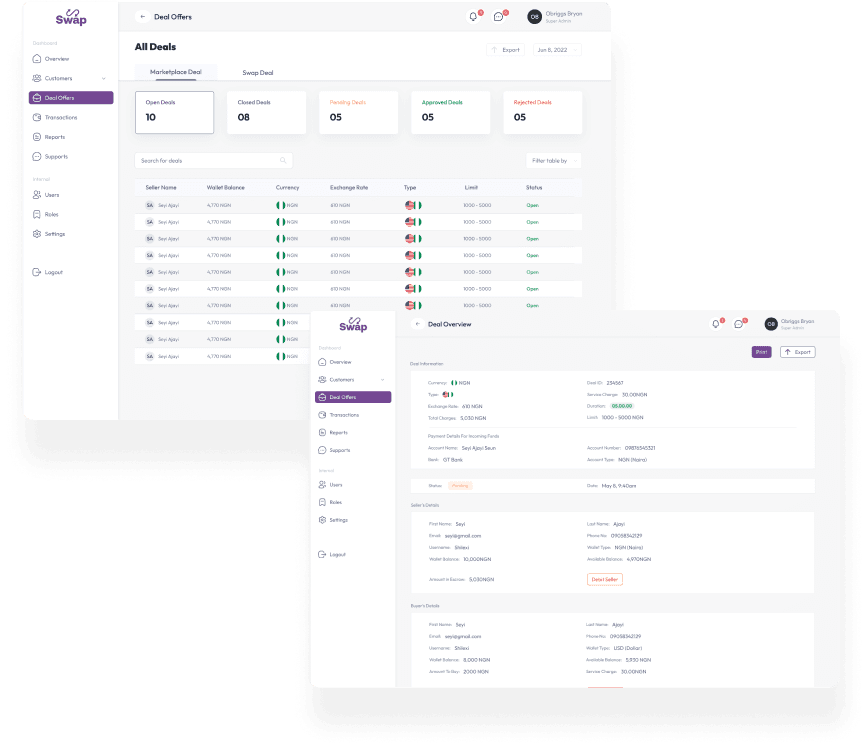
A clearer operational cockpit.
Test, learn, tighten.
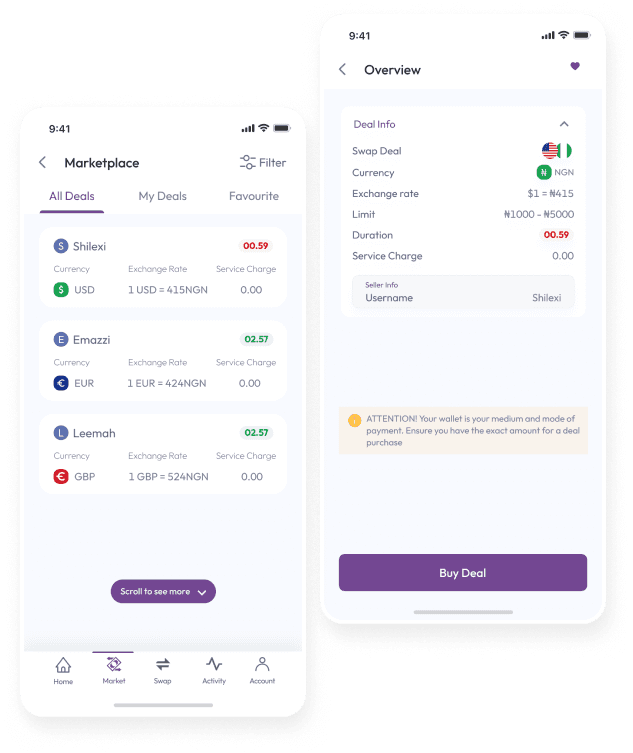
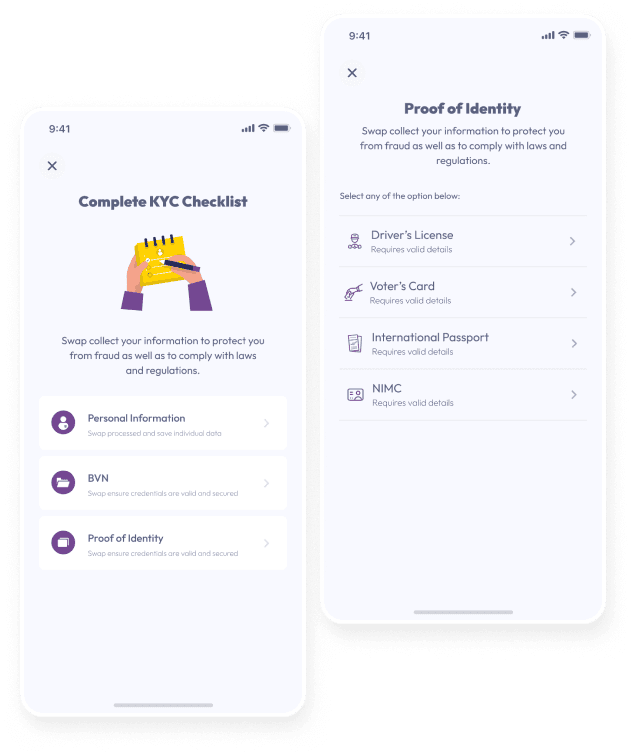
During the usability sessions, we observed users struggling with the complexity of managing multiple wallets. This informed our design decisions to simplify the interface and streamline the user flow.
Better work, measured.
The lesson.
Leadership lesson:
Swap reinforced the importance of aligning teams around clear priorities and making deliberate
trade-offs. Strong leadership meant knowing when to simplify, defer, or challenge a decision to keep the
team focused on the highest-value outcomes.
Product lesson:
In fintech, even simple user flows depend on a wider ecosystem of compliance, third-party providers,
operations, and infrastructure. Designing effectively requires understanding and accounting for these
dependencies early.
Design lesson:
The strongest design decision was not adding more functionality, but knowing what to simplify, defer,
and prioritise. The goal was to deliver the most immediate value while creating a foundation that could
evolve with the product.